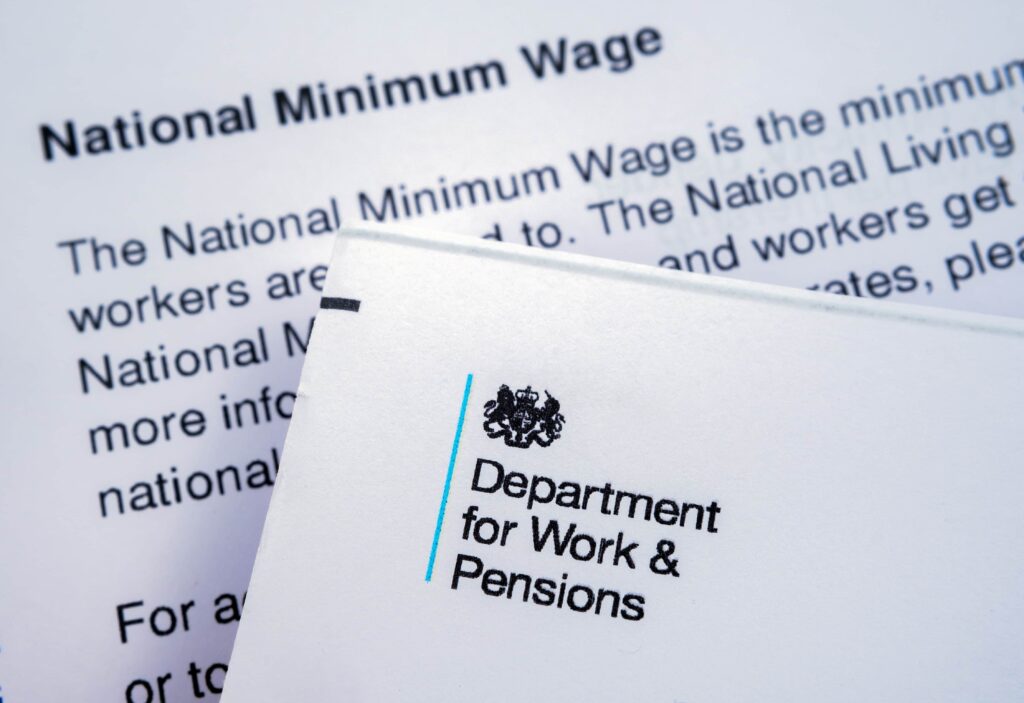
The new rates for the National Minimum Wage and National Living Wage rates have been announced in the Autumn 2026 budget. They will increase by 3.9% to reflect the impact of inflation.
The new rates which will be effective from 1 April 2027 are:
- National Living Wage increases to £13.21 (from £12.71) for over 21s.
- The 18-20 year old rate increases to £11.27 (currently £10.85).
- For 16-17s and eligible apprentices the rate increases to £8.31 (from £8.00).
The Low Pay Commission’s recommendations to the Government have been accepted in full. The gap between the 18-20 year old rate and the National Living Wage has not been narrowed despite Labour’s manifesto pledge to equalise the two rates. The 18-20 rate has been increasing faster than the NLW since 2024 anyway.
A new Parental Allowance will extend parental pay to eligible self-employed fathers, partners and adopters, who currently have no entitlement. This new entitlement will however not take effect until April 2029.
The Government has reiterated its intention to legislate around non-compete clauses in employment contracts. Quite what is driving this is uncertain. It is not employment lawyers nor is it the trades unions. See our most recent blog here which also contains links to previous commentary around this.
The Government has pledged £15 million over the next three years to the Office for the Impact Economy to underpin the work of the National Taskforce for Tackling Misogyny. This will include schemes to provide workplace training which is alleged to benefit women and girls.
£100 million will be invested over two years from 2027 to expand local apprenticeship services. A White Paper will be published in early 2027 in response to the final report from Alan Milburn’s review into young people and work. This would need at least 3% of jobs in large government infrastructure and construction projects to be apprenticeships.
This Government will not stop tinkering with employment legislation. Only time will tell how successful their overall strategy will prove to be.